What Do Irises Represent in Post-Impressionist Art?
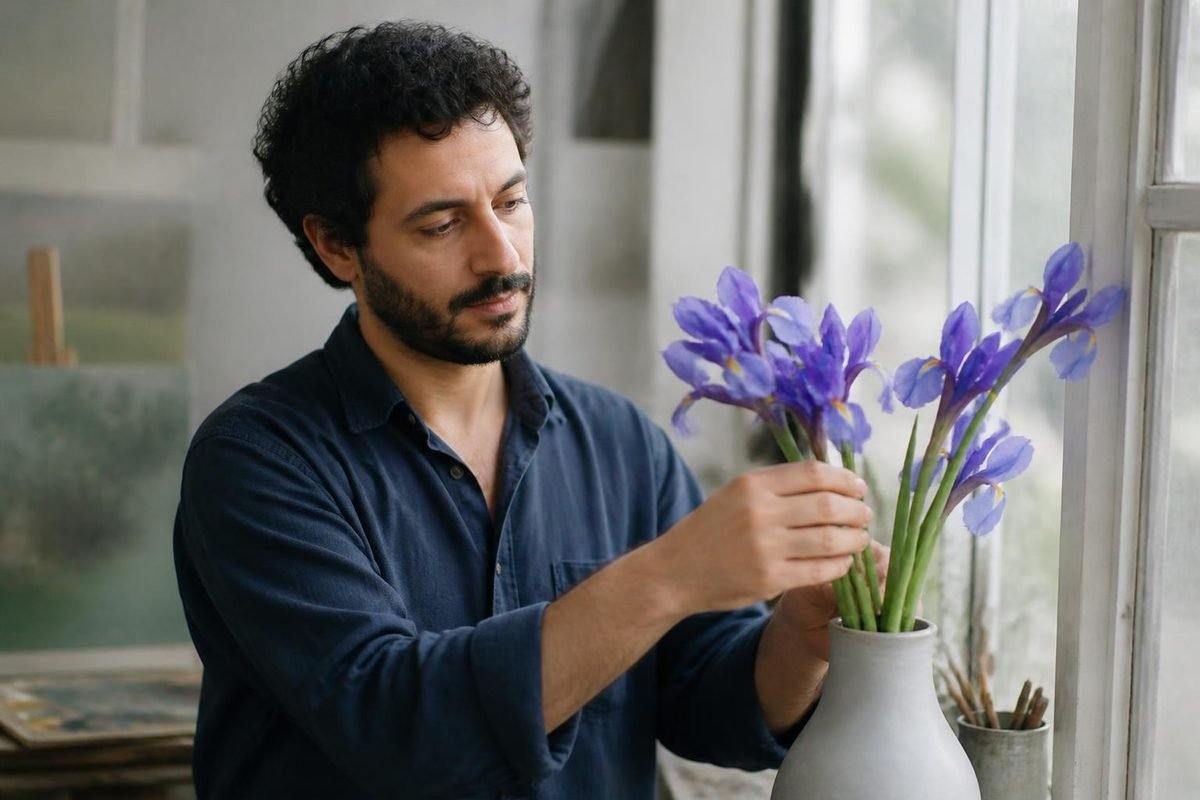
In Post-Impressionist art, irises can suggest hope, renewal, and the quiet strength of nature. Their meaning is not fixed, though, and their color and shape can matter as much as any symbolism.
Irises as signs of renewal
Irises grow from bulbs or rhizomes and flower in spring or early summer, depending on the type. This seasonal return can make them a fitting image for renewal. A viewer might see the flowers as a reminder that growth continues through difficult periods.
That reading is especially tempting in the work of Vincent van Gogh. He painted irises in 1889 while living at the asylum in Saint Rémy, France, where he had admitted himself for treatment. The garden offered him subjects close at hand. Knowing this can deepen a response to the painting, but it does not prove that he intended the flowers as a message of recovery.
It is all right to hold both thoughts at once. The flowers grew in a real garden, and they can also carry a sense of renewal for someone looking at them.
Color, movement, and attention
Post-Impressionist artists explored ways to use color and form for more than a faithful record of a scene. In Van Gogh's Irises, the flowers fill much of the canvas. Their curling petals, pointed leaves, and varied blue and violet tones give the painting a lively rhythm.
The flowers do not all face the same way. Leaves cross, petals bend, and a single pale iris stands among the darker blooms. These details draw the eye around the picture and give each flower a distinct presence. They can suggest vitality, but they also show how carefully the artist looked.
Not every iris in a painting needs to stand for an emotion. Sometimes a flower is also an absorbing subject: a chance to study how one shape presses against another, or how color changes beside green leaves and warm soil.
How to read an iris painting
If you are looking for meaning, start with what is visible before deciding what the flowers represent.
- Notice the color. Are the petals pale, deep, or set against a contrasting background?
- Follow the shapes. Look at the direction of the leaves and the curves of the petals.
- Consider the setting. A garden, a vase, or a tightly cropped group of flowers can create different feelings.
- Learn about the artist and date. This context may support an interpretation, but it cannot settle every question.
Your response matters too. A painting can feel peaceful to one person and energetic to another, without either reading needing to be the only answer.
Questions about irises in art
Did Van Gogh paint more than one picture of irises?
Yes. He painted irises in a garden and also made still lifes showing the flowers in vases.
Do blue irises always represent sadness?
No. Blue can create many moods, and its effect depends on the surrounding colors and the way it is used.
Is hope the only meaning of an iris?
No. An iris can suggest renewal or vitality, or simply invite attention to its color and form.
More to read: guide to flower paintings